Loading...
Serving Santa Rosa, CA and surrounding areas. (707) 867-4904
Sonoma County rural properties need fencing that handles clay soils, fire-risk zones, and real livestock pressure. We build farm and ranch fences that stay straight and tight year after year - and we know the local permit rules before we show up.
Farm and ranch fencing in Santa Rosa covers everything from perimeter fencing around a rural property to paddock dividers, livestock containment, and wildlife exclusion barriers - with most standard installations on one- to five-acre properties taking one to three days once permits and property lines are confirmed.
Santa Rosa and the surrounding Sonoma County area have a significant number of semi-rural properties - horse lots, small livestock operations, hobby farms, and rural residential parcels that straddle residential and agricultural zoning. These properties have fencing needs that are completely different from a standard suburban yard, and the rules that apply to them - including permit requirements and creek setbacks - are different too.
For properties where the goal is keeping animals contained, we also install pet and dog fencing and wood fencing for areas where a more finished look matters. Whatever your property looks like, we walk the fence line with you before recommending anything.
Walk your fence line and look for posts that have tilted or wire that sags between posts. This is a sign that posts have shifted - often because of Sonoma County's clay soils expanding and contracting through wet and dry seasons. A leaning post will not fix itself, and slack wire is an escape route waiting to happen.
If you are finding livestock outside their paddock, or if wildlife is getting into areas you want protected, your fence has failed at its most basic job. This happens gradually as wire stretches, staples pull loose, or gate latches wear out. Do not wait for a full escape or a damaged garden to take it seriously.
If your property was in or near the path of a Sonoma County wildfire, your fence posts - especially wooden ones - may have been weakened or destroyed even if they are still standing. Fire-damaged wood loses structural integrity and can fail without warning. A post that looks intact above ground may be charred through at the base.
If you are bringing horses, goats, sheep, or other livestock onto a property for the first time, the existing fencing almost certainly is not adequate. Livestock fencing has to be designed for the specific animal - what contains cattle will not contain a goat. Getting the right fence before the animals arrive is far easier than fixing an escape situation after.
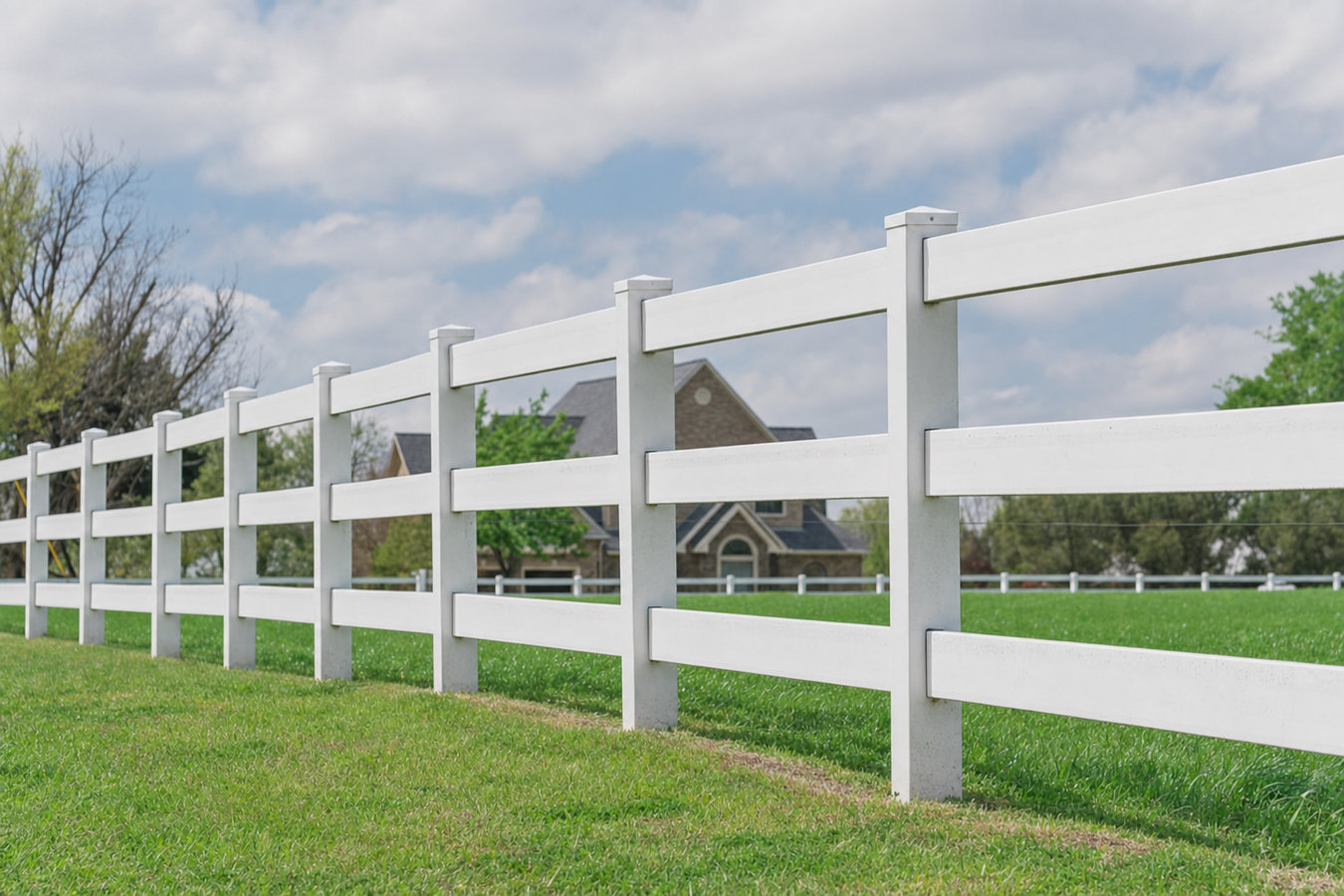
The right fence for a farm or ranch property depends entirely on what you are trying to accomplish. For horse paddocks and pastures, wood post-and-rail fencing is popular because horses can see it clearly and it is easy to repair a damaged section. For cattle, goats, or sheep, woven wire and field fence hold up to animal pressure better than plain wire and are harder for smaller animals to push through or get their heads caught in. High-tensile wire is the most cost-effective option for large acreage where you are running fence over long distances and want something that will last for decades with minimal maintenance.
Beyond the fence material itself, we handle gates - which are the most-used and most failure-prone part of any farm fence - using heavy-duty hinges and extra post depth at gate locations. We also work with pet and dog fencing for smaller animal containment and wood fence installation when your property needs a finished perimeter alongside working farm fencing. Every project starts with a site visit - phone estimates on rural fencing are not reliable because terrain, soil, and access all affect cost in ways you cannot see from a conversation.
Popular for horse properties - clean look, easy to repair, and horses can see it clearly to avoid running into it.
Good for cattle, goats, and sheep - holds up to pressure and is harder for animals to push through than plain wire.
Best for large acreage where cost per linear foot matters - lasts 30 or more years when installed correctly.
Practical for fire-risk zones and utility fencing where non-combustible materials near structures are preferred.
Santa Rosa and the surrounding Sonoma County area have experienced some of the most destructive wildfires in California history - including the 2017 Tubbs Fire - and that has changed how many landowners think about fencing materials near structures and defensible space zones. Non-combustible materials like metal T-posts and wire make more sense than all-wood fencing in high fire hazard severity zones, and this is a conversation worth having with your contractor before you commit to a material. The clay-heavy soils across much of Sonoma County also make post installation harder than it looks: posts set without proper depth and anchoring will gradually lean as the soil swells and contracts through each rainy season.
We serve farm and ranch fencing customers throughout the greater Santa Rosa area, including rural property owners in Petaluma and Cloverdale. Sonoma County's rules about fencing near creeks, drainage corridors, and riparian areas add a layer of complexity that many out-of-area contractors miss entirely - we know these requirements and factor them in before a single post goes in the ground. See Sonoma County Permit and Resource Management and UC Cooperative Extension for research-based guidance on agricultural fencing in California.
We will ask about what you are trying to contain or protect and roughly how much fencing you need. Most reputable contractors in the Santa Rosa area want to visit before giving a price - we will respond within 1 business day to schedule your on-site estimate.
We walk the property with you, look at the fence line, and note any obstacles - buried irrigation, rocky sections, or areas near creeks. You receive a written quote breaking down materials and labor clearly so you know what you are paying for.
Before work begins, we confirm property lines and help you understand whether a Sonoma County permit applies to your project. If a permit is required, we help navigate what is needed so there are no mid-project stops.
The crew sets corner and end posts first, then line posts, then wire or boards. Gates are hung last. Once the fence is complete, we walk the entire line with you - checking wire tension, gate operation, and cleanup - before we consider the job done.
We walk your property before quoting anything - no phone guesses, no surprises. Call us or fill out the form and we will respond within 1 business day.
(707) 867-4904Santa Rosa's clay soils expand and contract with each rainy season. We set posts deeper than the minimum and use proper anchoring for local soil conditions - so your fence line stays straight and tight through winter rains and dry summers, not just on installation day.
Many Santa Rosa properties carry elevated wildfire risk. We will talk through fence materials honestly - including where non-combustible metal T-posts and wire make more sense near structures - so your fence does not become a liability the next time fire season arrives.
Many Santa Rosa-area properties sit in agricultural or rural residential zones with different permit rules. We are familiar with Sonoma County's land use patterns and know which questions to ask about creek setbacks, riparian rules, and agricultural fencing requirements before work begins.
We hold a valid California Contractors State License Board license and carry full liability insurance. Any California contractor charging over $500 for labor and materials is required to be licensed - you can verify our license on the CSLB website at any time before hiring.
Rural fencing jobs have more variables than suburban jobs - terrain, soil, livestock type, zoning, and proximity to waterways all affect the outcome. We ask the right questions upfront so you get a fence built for your property, not a one-size-fits-all solution that needs to be redone in a few years.
Dedicated pet containment fencing for dogs and smaller animals, designed to prevent escapes without the industrial look of field fence.
Learn MoreRedwood and cedar fencing for property perimeters, paddock boundaries, and anywhere a finished appearance matters alongside working farm fencing.
Learn MoreContractor schedules fill fast in spring - reach out now to lock in your date before the dry season rush begins.